Sleep Guide
What's the Best Bedroom Temperature for Sleep?
A cooler room helps your body do what it naturally wants to do at night. Here's the number to aim for and how to get there.
Published · 5 min read
If you've ever kicked off the covers at 2 a.m. or woken up sweaty, you already know temperature matters for sleep. What surprises most people is how cool the ideal bedroom actually is.
The number to aim for
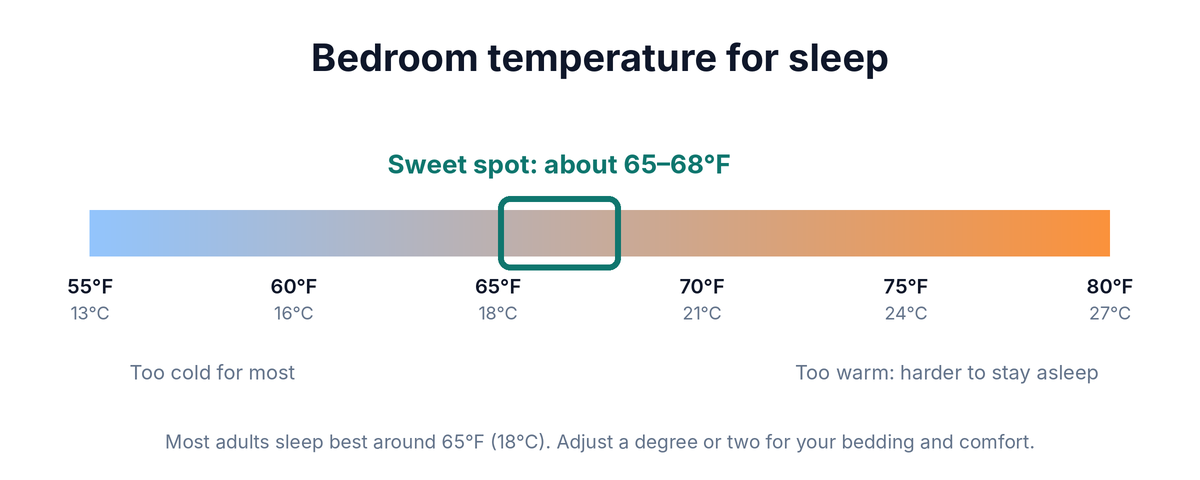
According to the Sleep Foundation, the best bedroom temperature for most adults is around 65°F (18.3°C), within a range of about 65 to 68°F. That's cooler than many people keep their homes during the day, so it may feel a little chilly at first, especially if you're used to a warm bedroom.
Treat it as a starting point, not a rule. Your bedding, pajamas and personal preference all play a part. If you're cold at 65°F with light bedding, nudge it up a degree or two.
Why a cooler room helps
Your core body temperature follows a daily rhythm. It starts to fall about two hours before you usually go to sleep, around the same time your body releases melatonin, and keeps dropping into the early morning.
To cool down, your body moves heat from your core out to your hands and feet. A cool room makes that easier. A room that's too warm works against it, and research has linked a higher core temperature at night to less deep sleep and more waking up.
What about babies and kids?
Infants may do better in a room that's a degree or two warmer, up to about 69°F (20.5°C). Overheating is a concern for babies, so follow safe-sleep guidance: dress them in appropriate sleepwear, keep loose blankets out of the crib, and check whether they're too warm by feeling their back or tummy rather than their hands. Ask your pediatrician if you're unsure.
How to keep your bedroom in the right range
- Lower the thermostat at night. A programmable or smart thermostat can drop the temperature automatically about an hour before bed.
- Block daytime heat. Closing blinds or curtains during the day keeps the room from warming up.
- Move the air. A fan, an open window (when it's cooler outside) or air conditioning in hot weather all help.
- Watch humidity. Damp air makes a room feel warmer and stickier. A dehumidifier can help in humid climates.
- Choose breathable bedding. Cotton, linen and other breathable sheets and pajamas let heat escape instead of trapping it.
- Take a warm bath an hour or two before bed. It sounds backward, but warming up first helps your body cool down afterward.
If you're always cold at night
Cold feet can actually make it harder to fall asleep. If you're chilly, try warm socks or an extra layer on your feet rather than turning the whole room up. That way your feet stay warm while the room stays cool.
This article is for general information only and isn't medical advice. If you have ongoing pain or sleep problems, talk to a healthcare professional.